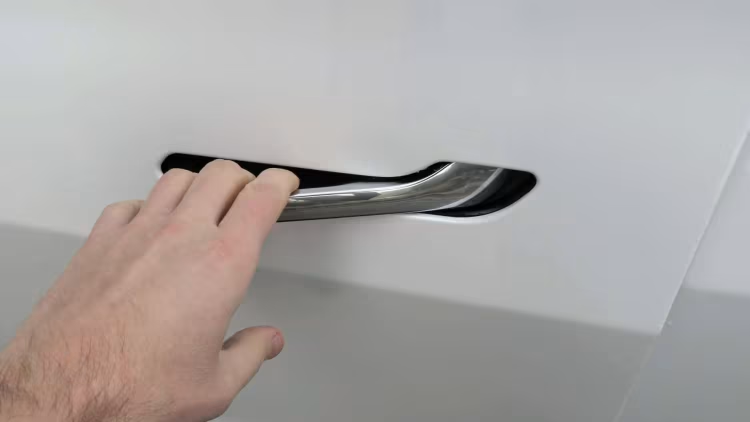
China Bans Hidden Car Door Handles in Major Safety Crackdown

China has introduced stringent new safety regulations through its Ministry of Industry and Information Technology, effectively banning non-mechanical (primarily electronic or fully hidden/flush) door handles on vehicles sold in the country. Under the mandatory national standard GB 48001-2026, which takes effect on January 1, 2027 for new models (with a grace period until 2029 for previously approved ones), every passenger door—excluding the tailgate—must feature a mechanically releasable exterior handle. This ensures doors can be opened manually from the outside even during emergencies like power failures, battery fires, or crashes where electronic systems may fail.
The rules stem from reported incidents where hidden or electric handles contributed to difficulties in escaping vehicles, prioritizing reliable egress over aesthetic or aerodynamic designs popularized by Tesla and adopted by many EV manufacturers.
The policy requires specific design elements, such as a minimum hand-operable recessed space (at least 60mm × 20mm × 25mm) for exterior handles, clear visibility and accessibility for interior mechanical releases, and structural strength standards (e.g., exterior handles withstanding at least 500 Newtons of force). While vehicles can still incorporate electronic conveniences as optional features, a fully independent mechanical backup is now mandatory to prevent scenarios where occupants or rescuers are trapped. This move positions China as the first major market to enforce such requirements, potentially influencing global automotive standards and forcing redesigns among EV makers reliant on sleek, pop-out, or power-dependent handles.
Tesla Door Handle Lawsuits
Tesla has faced multiple lawsuits over its electronic and flush-mounted door handles, which critics argue fail to open reliably during emergencies, particularly in crashes involving fires or power loss. Several wrongful death cases highlight incidents where occupants survived initial collisions but were trapped inside burning vehicles because the electronic systems malfunctioned, preventing doors from opening. For example, a recent Massachusetts lawsuit involves a 20-year-old Model Y driver who died from thermal injuries and smoke inhalation after a 2025 crash, with claims that the vehicle’s design trapped him despite pleas for help. Bloomberg investigations link at least 15 fatalities to similar issues across models like the Model Y, Model 3, Model S, and Cybertruck, where electronic door releases became inoperable due to battery failure or low voltage, and hidden manual overrides proved difficult or impossible to locate in panic situations.
These car door handle lawsuits often accuse Tesla of negligence, defective design, and failure to warn owners adequately about the risks, especially given reports of children trapped inside vehicles and first responders struggling to access occupants from outside. The National Highway Traffic Safety Administration (NHTSA) has launched probes into various Tesla models, including over 174,000 Model Ys, following complaints of inoperative handles and entrapment risks. While Tesla has acknowledged some concerns and indicated redesigns for future vehicles, the ongoing litigation and regulatory scrutiny underscore broader safety debates around electronic door systems in EVs, contrasting with requirements in markets like China that mandate mechanical backups to ensure reliable emergency egress.
Discover more from America 24
Subscribe to get the latest posts sent to your email.


Responses